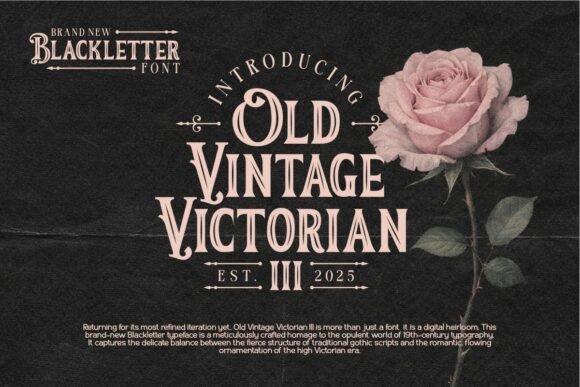
Old Vintage Victorian III: A Timeless Expression of Elegance and Ornament
The Old Vintage Victorian III font is a striking example of how historical design can be reimagined for contemporary use. This decorative serif typeface, rooted in the aesthetic traditions of the 19th century, offers a unique blend of boldness and intricacy that sets it apart from modern sans-serif or minimalist fonts. Its design is a tribute to the ornate typography that once adorned everything from newspaper headlines to shop signs, capturing the essence of an era defined by craftsmanship and artistic flair.
At first glance, the Old Vintage Victorian III font appears as a dramatic display typeface, with its strong serifs and high contrast between thick and thin strokes. These characteristics make it ideal for large-scale applications where visual impact is key. However, beneath its dramatic exterior lies a level of detail that speaks to the meticulous nature of Victorian-era typography. The inclusion of decorative inlines, swashes, and flourishes adds layers of complexity, making each character not just a letter but a piece of art.
One of the most compelling aspects of this font is its versatility. While it may seem suited only for vintage or retro-themed projects, its adaptability extends far beyond that. Designers have found creative ways to integrate Old Vintage Victorian III into modern branding, particularly in industries that value tradition and authenticity. Distilleries, for instance, often use this font on their labels to evoke a sense of history and craftsmanship, while boutique clothing brands incorporate it into their logos to convey a timeless quality.
Another area where Old Vintage Victorian III shines is in editorial design. Whether it's for a magazine spread, a book cover, or a poster, the font's ability to command attention without overwhelming the reader makes it a valuable tool. Its intricate details work best when used sparingly, allowing the text to stand out without becoming difficult to read. When paired with complementary fonts or color schemes, it can create a visual harmony that enhances the overall design.
For those working in the hospitality industry, this font offers a way to infuse a space with historical charm. Restaurants, cafes, and bars that aim to create a nostalgic atmosphere often turn to Old Vintage Victorian III for signage, menus, and promotional materials. The font's association with classic typography helps reinforce the idea of a place that values tradition and quality, appealing to customers who seek more than just a meal or drink—they want an experience.
Despite its ornate appearance, Old Vintage Victorian III is not without practical considerations. Its complexity can sometimes make it less suitable for body text, especially in digital formats where readability is crucial. Designers must be mindful of the context in which they use the font, ensuring that it complements rather than complicates the message. In some cases, using it as a headline or title may be more effective than attempting to use it throughout an entire document.
The font's popularity has also led to its use in various cultural and educational contexts. Historians and researchers studying 19th-century typography often reference Old Vintage Victorian III as a modern interpretation of historical styles. Educators, too, have found it useful in teaching students about the evolution of type design, offering a tangible example of how past aesthetics continue to influence present-day practices.
When considering the implementation of Old Vintage Victorian III, it's important to understand the technical requirements. As a decorative serif font, it may require specific licensing for commercial use, and designers should ensure that they are using the correct file formats for their intended platform. Additionally, compatibility across different operating systems and design software can vary, so testing the font in multiple environments is advisable before finalizing a project.
Looking ahead, the continued relevance of Old Vintage Victorian III suggests that there is a growing appreciation for historical design elements in modern contexts. As more designers seek to differentiate their work through unique typography, fonts like this one will remain in demand. Their ability to bridge the gap between past and present ensures that they will continue to play a role in both traditional and innovative design practices.
Ultimately, the Old Vintage Victorian III font is more than just a stylistic choice—it's a statement. It speaks to a desire for authenticity, a recognition of the beauty in historical design, and a willingness to embrace the richness of the past in the present. Whether used in branding, editorial work, or personal projects, it brings a sense of depth and character that few other fonts can match.
As with any design element, the success of Old Vintage Victorian III depends on how it is applied. When used thoughtfully, it can elevate a project and add a layer of sophistication that resonates with audiences. For those willing to explore its potential, the font offers a powerful way to express creativity while honoring the legacy of Victorian typography.